Leaf Mould or Compost for a New Border?
Leaf mould or compost for a new border? Compare texture, soil benefits and best uses to choose what to spread before planting.
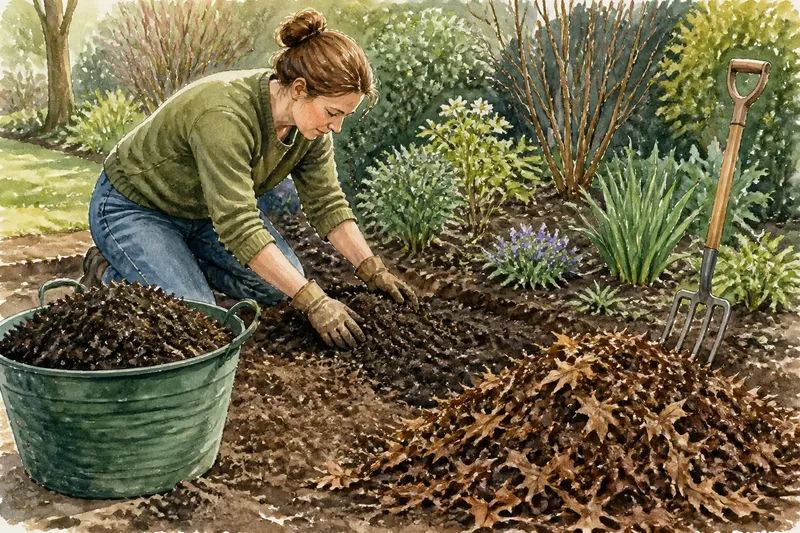
Leaf mould or compost for a new border? The choice depends on what your soil needs and what you want to do before planting. Leaf mould is made from decomposed leaves and tends to be fibrous and gentle; garden compost is a more varied, nutrient-bearing material that can add body and fertility. Neither is a universal substitute for the other.
For a typical new planting area, you can use one, the other, or both in different ways. Look at the soil after rain and when it dries, consider the plants planned for the border, and decide whether your priority is improving texture, adding organic matter, or feeding established plants.
What does leaf mould add to a planting area?
Leaf mould is created as fallen leaves break down, usually in a leaf pile or mesh enclosure. Mature material is dark, crumbly and often still recognisably fibrous. Its main contribution is organic matter that can help soil hold moisture and become more workable. It is not usually chosen as a concentrated source of plant nutrients.
Its loose texture makes leaf mould useful as a surface mulch around shrubs, perennials and woodland-style plantings. It can also be worked lightly into the top of a planting area when the ground is open and not waterlogged. The material blends gradually rather than behaving like a dense, fine soil amendment.
Leaf mould suits gardeners who have a ready supply of fallen leaves and want to recycle them into a gentle soil conditioner. It is particularly appealing for planting areas where a soft, moisture-retentive surface is useful. If you need to improve fertility for hungry plants, leaf mould alone may not meet that aim.
What does garden compost contribute?
Garden compost is made from a mixture of decomposed plant materials, often including vegetable trimmings, spent flowers, leaves and other suitable garden waste. Its texture and nutrient content vary with the ingredients and how fully they have broken down. Finished compost is generally dark and crumbly, but it may contain a wider range of fine and coarse particles than leaf mould.
Adding compost to a planting area supplies organic matter and can contribute nutrients as it continues to break down. It can be mixed into the surface layer before planting or placed around established plants as a top dressing. Compost is a useful general amendment, but it should not be treated as a complete fertiliser or a substitute for choosing plants suited to the site.
Compost suits a gardener preparing a mixed border who wants one broadly useful organic material. It is also practical when the soil seems low in organic matter and the planting plan includes a range of perennials and shrubs. For plants adapted to lean conditions, use restraint rather than enriching the whole area heavily.
How do their textures change the choice?
Texture affects how each material feels in the hand and how it behaves once spread. Leaf mould is often more fibrous and springy. Compost is commonly finer and more varied, depending on its ingredients. A handful of either material should smell earthy; if it smells sour or contains lots of recognisable, undecomposed scraps, leave it to mature further rather than placing it around new plants.
In heavy soil, organic matter can help create a more open structure over time, but a small scattering of either material will not instantly transform a compacted planting area. Avoid working wet clay when it smears and sticks to tools: wait until it crumbles more readily. In light, sandy soil, organic matter can help the surface retain moisture, though the improvement depends on continued care and the soil beneath.
Neither material should be used to bury the root crowns of existing perennials or pile against woody stems. Keep the surface layer even and leave breathing room around plant bases. For a new border, make sure the finished soil level remains appropriate for the plants you intend to set out.
Which option fits your border?
- Choose leaf mould when a soft, moisture-holding surface and a gentle source of organic matter are the main aims.
- Choose garden compost when you want a general amendment that also contributes nutrients as it breaks down.
- Use both selectively when you have each material available: compost can be incorporated into the planting area, while leaf mould can form a surface layer.
- Use less of either when the planting plan includes species that prefer lean soil or when the existing ground already has plenty of organic matter.
Say you are preparing a new border in soil that dries quickly, and your planned plants include a mix of shrubs and moisture-loving perennials. You could mix a modest layer of finished compost into the surface before planting, then spread leaf mould around the plants afterward. The observable result to look for is a loose, covered surface rather than bare, rapidly drying soil; adjust future additions if the border stays too rich or persistently damp.
What should you check before spreading either?
Assess the planting area first. Push a hand fork into the soil when it is neither saturated nor bone dry, and notice whether the ground breaks into crumbs, clods or a hard mass. Check whether water tends to linger after rain or disappear quickly. These clues help you decide whether your aim is better surface moisture, a looser texture or more organic matter.
Then consider the plants. A border of woodland perennials has different needs from one designed around drought-tolerant herbs and grasses. If the plant label, compost maker’s instructions or local rules specify a particular use, follow that guidance; those details can vary by product and site.
Check that compost is mature and free of persistent weed roots or obvious diseased material. Leaf mould should be sufficiently broken down for its intended use. Coarse leaves can remain useful as a protective surface cover, but they are less convenient to incorporate into a fine planting surface.
What is not worth the effort is trying to make either material perform every soil-improvement job at once. You do not need to sift all your leaf mould into a fine texture or turn a border into a deep bed of compost. Match the material to the soil and plants, and keep additions measured.
Which questions help settle the decision?
Can leaf mould replace compost in a new border?
It can supply organic matter and help cover the soil, but it generally contributes fewer nutrients than garden compost. Choose it when texture and moisture retention matter more than feeding, or pair it with compost where the planting plan calls for a broader amendment.
Can I mix leaf mould and compost together?
Yes, provided both materials are mature and suitable for garden use. Mixing them is one option, but you can also use compost in the planting area and leaf mould as a surface mulch so each material has a distinct role.
Should either material go into every planting hole?
There is no need to fill individual holes with a rich pocket of amendment. Prepare the surrounding planting area consistently so roots can grow into the soil beyond the hole, and follow the needs of the species you are planting.
How can I tell whether my soil needs more organic matter?
Notice how it feels when workable: soil that is very sticky, hard to crumble or quick to dry may benefit from ongoing organic matter additions. That observation is a starting point, not a diagnosis; plant choice and drainage also affect what a border needs.
How can you make the final choice?
Use leaf mould when you want a gentle, fibrous conditioner or a natural-looking mulch. Choose garden compost when you want a more general soil amendment with some nutrient contribution. Use both if their separate roles suit the border, and use neither as an excuse to ignore drainage, plant preferences or the existing soil.
For leaf mould or compost for a new border, the clearest decision is the one that fits the plants and the ground you actually have. Start with a modest, even application, observe how the surface behaves through ordinary weather, and add more only when the border gives you a reason to do so.