The Myth of the Perfectly Tidy Border
A tidy border can still feel lifeless. Learn how seed heads and varied plant forms add structure, and what to change when a planting looks messy.
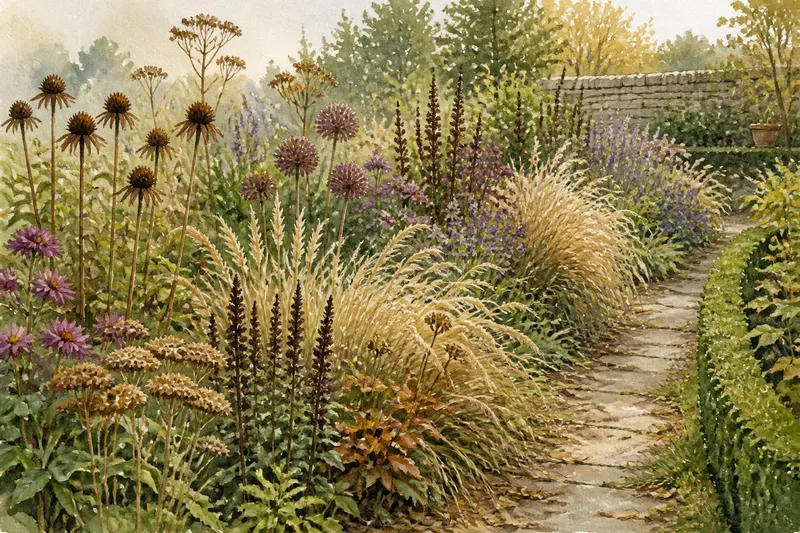
If your border looks untidy as soon as the flowers fade, the trouble may not be the plants. A perfectly tidy border often depends on removing the very seed heads and stems that give a planting shape. The aim is not to leave everything standing; it is to distinguish useful structure from genuine clutter.
Why does a tidy border look flat?
A border can feel oddly featureless when every plant is clipped, deadheaded, or cut back at the same time. The usual cause is treating all faded growth as waste. Upright seed heads, dry grasses, and sturdy stems create distinct outlines, especially when flowers are no longer doing the visual work.
Look at the planting from a window or path rather than inspecting each plant up close. Notice whether the border has varied heights and shapes, or whether it has become a low, even strip. If every plant has been cut to the same level, leave sound stems on selected plants next time and assess their shape through the season.
Choose plants whose mature forms suit the space. Flat-topped seed clusters, rounded heads, fine grass plumes, and branching stems all create different silhouettes. Repeating a few forms through the border gives the eye a pattern; mixing every shape without rhythm can look accidental.
What if the border looks messy instead of relaxed?
A loose planting still needs boundaries. Flopping stems across a path, collapsed foliage over neighboring plants, or a thicket of tangled growth usually signals a practical problem, not a need for more tidiness. The common causes are overcrowding, plants placed too close to an edge, or forms that cannot support their own height in that spot.
Start with the obstruction. Remove broken stems and anything blocking a path, then tie or discreetly support a plant if it is healthy but leaning. If a plant repeatedly sprawls into a walkway, move it farther back or replace it with a lower-growing choice. Avoid shearing the whole border just to correct one plant’s habit.
Say you have a clump of ornamental grass that leans across a narrow path after rain. You could trim the path-facing leaves, then observe whether the clump still blocks passage as it grows. If it does, relocating the grass behind lower plants is likely to solve the recurring issue more neatly than repeated clipping.
How can you keep seed heads without inviting a jumble?
Be selective. Keep sturdy, attractive heads where they add a clear vertical or rounded accent, and remove stems that are broken, muddy, or visually tangled with nearby growth. A small hand pruner is enough for individual stems; for a broader cut, use clean garden shears and work plant by plant rather than leveling the whole border.
- Keep: firm stems that remain upright and have a recognizable outline.
- Thin: crowded growth that hides neighboring plants or turns into a knot.
- Cut back: damaged stems that drag over paths or obscure a plant you want to see.
- Leave selectively: heads that add visible structure, rather than retaining every faded flower by default.
- Reassess: after weather changes the shape; a stem that stood well may later collapse.
Seed heads can also provide food or cover for wildlife, but the value varies by plant and setting. If you want to retain them, leave some sound heads in place and remove those that create a nuisance. Check plant labels and local guidance where a plant’s behavior or handling is uncertain.
Why does one plant dominate the border?
A single plant can make the whole border seem disorderly when its height, spread, or texture overwhelms its neighbors. This often happens because the plant was judged by its pot size rather than its established form, or because surrounding plants have not yet filled in. Cutting it back may disguise the imbalance briefly without addressing the placement.
Compare the plant’s outline with the plants beside it. If a broad clump hides smaller forms, remove a portion of the clump or shift the smaller plants toward a clearer opening. If a tall, narrow plant adds a useful accent but looks isolated, repeat that form elsewhere rather than surrounding it with a uniform row of clipped plants.
Not every contrast needs correcting. A fine-textured grass beside broad leaves can make both forms easier to read, while a mix of similarly sized, similarly shaped plants may blur together. The useful question is whether each plant contributes a discernible shape, not whether the border looks evenly matched from end to end.
When should you cut everything back?
There are times when a clean cut is the sensible choice: growth may be diseased, broken, unsafe near a path, or so collapsed that it smothers nearby plants. But cutting every stem simply because flowers have faded removes useful variation along with the untidy parts. Decide by plant condition and the border’s actual needs, not by a rule that all faded growth must go.
Where stems remain sound, you can leave some standing through colder weather and remove them when new growth makes the old material easy to distinguish. That approach also avoids cutting into fresh shoots by mistake. If a plant needs a different schedule, follow its label or the grower’s instructions.
It is not worth spending an afternoon trimming every seed head to identical heights. That effort creates a short-lived uniform surface and often makes the border look more bare, not more composed. Direct attention to damaged stems, blocked paths, and plants that are crowding their neighbors.
What should you ask before tidying a border?
Should every faded flower be deadheaded?
No. Remove flowers that look scruffy or are setting seed where you do not want seedlings, but retain attractive heads that contribute shape. The right choice depends on the plant and the effect you want in that part of the border.
Can seed heads make a border look intentional?
Yes, when their forms are visible and spaced through the planting rather than tangled together. Repeated upright, rounded, or airy shapes can give a border a coherent outline after flowering ends.
What if the plants are blocking a path?
Clear the path first by pruning or supporting the specific stems in the way. If the same plant keeps spreading into the route, its position or mature size may be wrong for that edge.
How do I know what to leave standing?
Keep stems that are sound, distinctive, and not smothering neighboring growth. Remove those that are broken, collapsed, or making the planting hard to use.
How can a border look cared for without looking clipped?
Keep a few firm edges clear: the path, lawn boundary, or front of a bed. Then let the plants behind that line vary in height and form. This small contrast makes an informal planting read as deliberate without requiring every stem to be restrained.
For a more balanced border, watch it from the places where you actually see it. If the seed heads create a clear rhythm and the paths remain open, leave them. If the planting becomes a tangle, edit the plants causing the problem rather than erasing all its seasonal structure. A tidy border can still have movement; the useful standard is a planting that looks composed and remains easy to care for.